Unpolished Talent: The Enterprise Hiring Blind Spot That Keeps Costing You
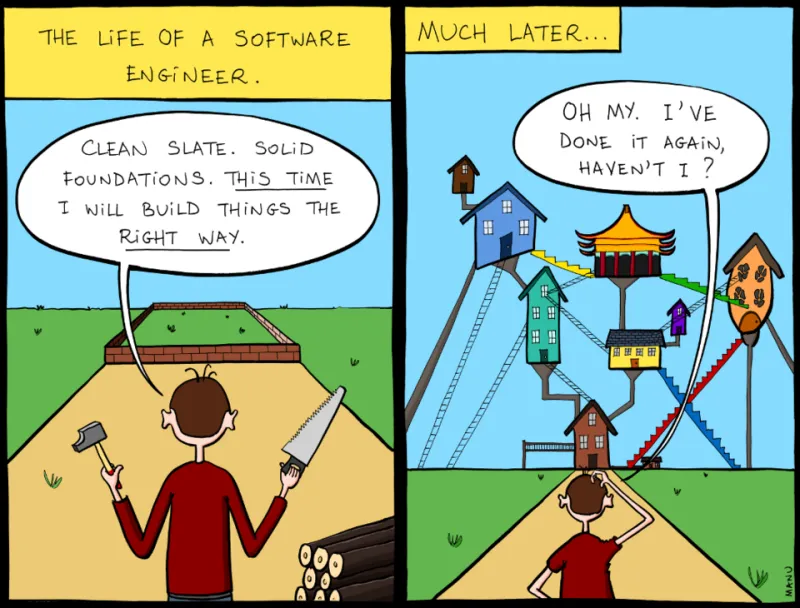
Photo: Manu Cornet, CC BY-SA 4.0, via Wikimedia Commons
Every quarter, thousands of American enterprises post openings for senior engineers, and every quarter they compete for the same small pool of candidates who have already worked at three recognizable names. Meanwhile, inside their own buildings — or on their own video calls — sit engineers with raw aptitude, unusual problem-solving instincts, and no brand-name pedigree. They are the rough equivalents of uncut stones: high intrinsic value, low visual signal. Most organizations never bother to cut them.
The result is a hiring economy that behaves like a crowded auction. Compensation for credentialed senior talent in major US markets keeps climbing, retention offers escalate, and yet internal capability barely moves. The problem is not a talent shortage. It is a recognition shortage.
Why the Pipeline Filters Out Potential
Traditional enterprise hiring optimizes for legibility. Applicant tracking systems scan for keywords, degree requirements, and tenure at comparable companies. Recruiters, measured on time-to-fill rather than long-term outcomes, favor candidates who require no translation: someone from a Fortune 500 peer with a tidy title.
But legibility and capability are not the same thing. The engineer who spent five years modernizing a logistics platform at a mid-market distributor in Ohio may have solved harder problems than a staff engineer who inherited a mature system at a coastal technology giant. The pipeline cannot see that difference, so it defaults to the résumé that reads faster.
Internal mobility suffers from a parallel failure. High-potential engineers doing unglamorous work — legacy maintenance, internal tooling, unsexy integration projects — are precisely the people least likely to be visible to leadership. Visibility, unfortunately, is the currency of promotion.
What a Rough Gem Actually Looks Like
Spotting undeveloped talent requires looking for signals that survive translation across contexts:
- Diagnostic instinct. They ask questions that reframe the problem before proposing solutions.
- Ownership without title. They fix things that were not assigned to them, quietly and without ceremony.
- Learning velocity. Given a new domain, they become conversational in weeks, not quarters.
- Candor under pressure. They say "I don't know, but I'll find out" — a rarer trait than any framework fluency.
None of these appear on a résumé parser. All of them are observable by the managers and peers who work alongside these engineers daily. Which points to the real mechanism: identification is a social problem, not a screening problem.
A Practical Vetting and Development Approach
Enterprises that succeed here tend to run three connected practices.
Structured internal referrals for potential, not openings. Ask team leads a different question each quarter: not "who wants this role" but "who surprises you?" Track the answers. Patterns emerge quickly.
Stretch assignments with real stakes and real safety nets. Potential is revealed under load. Give promising engineers a bounded, meaningful problem — a migration, a reliability initiative — with senior sponsorship and permission to fail. Six weeks of observed behavior beats six rounds of interviews.
A defined development runway. Rough gems need deliberate cuts. Pair them with senior mentors, budget protected learning time, and — critically — make the promotion path legible so ambition does not have to exit the building to be rewarded.
The Competitive Arithmetic
Consider the economics. Recruiting and onboarding a senior engineer in a competitive US market routinely costs well into six figures once agency fees, sign-on bonuses, and ramp time are counted. Developing an internal candidate costs a fraction of that and carries a materially higher success rate, because the person already understands your domain, your systems, and your politics.
There is also a defensive argument. The engineers you overlook do not remain invisible forever. Recruiters comb LinkedIn; adjacent industries poach aggressively; the quiet high-performer on your infrastructure team has an inbox full of outreach. Every quarter of neglect is a quarter of free intelligence for your competitors.
Cut Before the Market Does
The organizations that consistently out-innovate their larger rivals are rarely the ones winning bidding wars for finished talent. They are the ones who learned to see value in unpolished form — and who invested the cutting work before anyone else noticed the stone was worth anything.
Your next principal engineer may already have a badge. The only question is whether you will recognize them before someone else does.